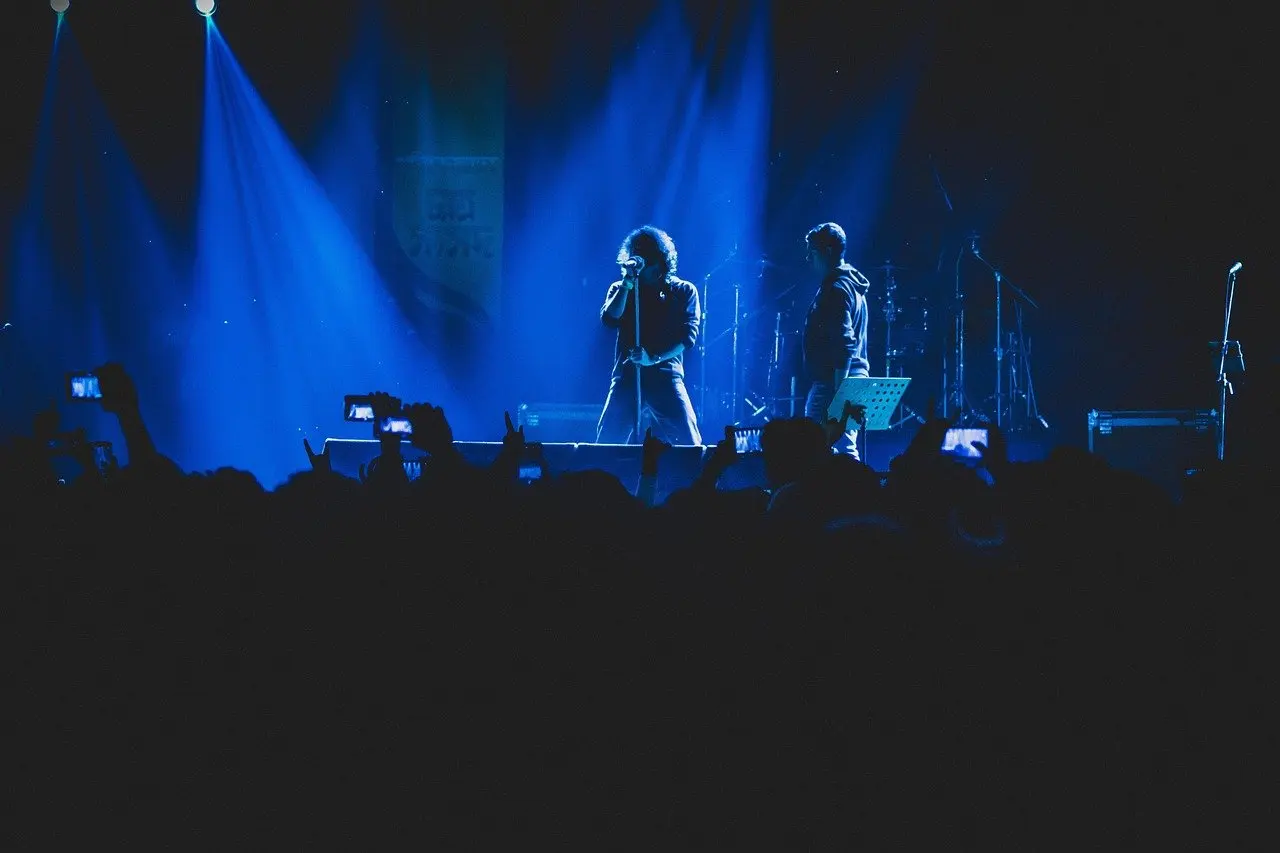
Adam Bauer kirtan is built on a warm baritone voice and harmonium, presented as Bhakti yoga. His clearest documented tie to Shyamdas is the Shyamdas Foundation’s audio archive, and live evenings are announced through ticket listings.
For wider context on new recordings and live devotional music, see our kirtan music news coverage.
How an Adam Bauer kirtan works
Kirtan is the joyous call-and-response practice of making music and chanting mantra together, according to the listing for one of Adam Bauer’s evenings. The leader sings, the room answers, and the music becomes a shared act rather than a performance to be watched. That mechanism explains most of what a listener hears on a kirtan recording: the call is the lead voice, and the response is the group joining in.

The same listing says Adam leads his chanting sessions with a warm baritone voice and sonorous harmonium accompaniment. Two instruments, voice and harmonium, define the sound. A listener expecting a full-band arrangement should adjust expectations, while someone who wants a close, voice-forward setting will find that format a good match.
Why the framing is Bhakti
The listing describes kirtan and satsang with Adam as a deep immersion in Bhakti, the yoga of devotion. That wording matters for how to approach the music. Devotion, rather than technical display, is the stated purpose, so the most useful way to judge a track is by how well it supports group chanting of the mantra, not by how complex the playing is.

The Shyamdas connection
The firmest evidence tying Adam Bauer to Shyamdas sits in the Shyamdas Foundation archive. The Foundation catalogues a collection titled “Shyamdas Stories at Omega: C.C. White and Adam Bauer”, which places Adam’s name beside Shyamdas’s stories in a single archive entry. The Adam 1 item page links to that collection directly.
This is the practical answer to why a Shyamdas dedication makes sense for an Adam Bauer release. A foundation devoted to Shyamdas’s legacy has filed Adam’s audio in its own catalogue, so the relationship is documented by the keepers of that legacy rather than assumed. The personal reasons behind any dedication are best read in Adam’s own words on the release page or in the liner notes, since an archive entry shows association, not motive.
What the archive item texts show
The archive pages carry short text lines that hint at the content. The Adam 1 page reads “naturally Shyam / all-access pass / Kankaroli Holi”. Those lines read like topic notes for spoken or sung material, and they show that the archive treats Adam’s items as part of a Shyamdas story collection, not as a stand-alone concert series.

The Foundation sorts its holdings into sections that include Audio, Live Events, Other Artists, Private Satsangs, Private Satsangs in Hindi and Studio Albums. Adam’s items are filed under Audio. That placement is useful when searching: a listener hunting for Shyamdas tribute material should start in the Audio section instead of the Studio Albums section.
Where to hear Adam Bauer
There are two documented routes: the Foundation’s archive for recorded audio, and ticketed evenings for live kirtan. The archive route suits anyone who wants to hear Adam in the context of Shyamdas material. The live route suits anyone who wants the call-and-response experience as it is meant to be practised, with a room answering the leader.
Archive audio at a glance
| Archive item | Length | Text on the item page | Planning use |
|---|---|---|---|
| Adam 1 | 7:14 (min:sec) | naturally Shyam / all-access pass / Kankaroli Holi | The longer item; a fuller listen to start with. |
| Adam 9 | 1:27 (min:sec) | Nothing I would rather be doing | A short clip; quick to sample. |
Lengths and titles come from the Shyamdas Foundation’s Adam 1 and Adam 9 archive pages.
Live evenings
Past dates are useful mainly as evidence of how Adam presents his sessions; anyone planning to attend should check the same ticketing page for newer dates before making travel plans.
Checking a release before you buy or cite it
Release details are easy to get wrong when they are repeated secondhand. Four facts anchor any album reference: the title, the release date, the label and the track list. Confirm each on the artist’s own page or a catalogue listing, and quote them exactly as printed there. A track list in particular should be copied from the release itself, because archive item names such as “Adam 1” are catalogue labels and not song titles.
- Start with the archive. Open the Foundation’s Adam Bauer collection to hear how his material sits beside Shyamdas’s stories.
- Sample before committing. The shorter Adam 9 item is the quickest way to hear his voice and style.
- Move to the longer item. Adam 1 gives a more extended listen and carries the Shyamdas-linked text lines.
- Watch for live dates. Ticket pages are where evenings with Adam have been announced.
Related kirtan coverage
Readers comparing leaders and formats may also want the latest on the guru ganesha band, which shows how a band-led approach differs from a voice-and-harmonium evening. For another well-known name in the genre, the page on jai uttal sita ram performances covers live appearances and the chant at their centre.
Frequently asked questions
Why is the album dedicated to Shyamdas?
The documented link is the Shyamdas Foundation’s archive collection “Shyamdas Stories at Omega: C.C. White and Adam Bauer”, which pairs Adam’s audio with Shyamdas’s stories. Adam’s own notes on the release are the place to read the reasons for a dedication.
Where can the album be heard or bought?
Adam’s audio can be heard in the Shyamdas Foundation’s Audio archive, where the Adam 1 item runs 7:14 and the Adam 9 item runs 1:27. For a purchase, use the artist’s own page or the catalogue listing for the release, and confirm title, date, label and track list there.
What instruments does Adam Bauer use?
His event listing describes a warm baritone voice with sonorous harmonium accompaniment.
What is kirtan?
Kirtan is a call-and-response practice of making music and chanting mantra together, which Adam’s sessions present as Bhakti, the yoga of devotion.