| Kirtan element | What it means for a newcomer | Planning use |
|---|---|---|
| Call-and-response singing | The leader sings a line and the room answers, so no prior knowledge is needed to take part. | Join the response lines first. Add the leader’s melody only once it feels familiar. |
| Harmonium with tabla and manjira | A drone-like keyboard sound sits under the voices, with drums and small cymbals for pulse. | Sit where you can hear the voices over the instruments if you want to learn the melodies. |
| Opening OM | Sessions are described as starting with the sound OM before mantras and singing. | Arrive before the start so the opening settles you into the room. |
| Singing together, not performing | The evening is framed as shared singing, not a concert. | Treat it as participation. Listening only is welcome, but joining in is the point. |
| Community setting | Some hosts run monthly, donation-based sessions that may open with a shared vegan meal. | Check the host’s format ahead and bring a small donation if the event runs that way. |
The table draws on a history of kirtan at Kirtans.com and a community kirtan write-up on Mornings with Moni.
A ragani kirtan interview is best read with a practical question in mind: how does a duo guide a room of newcomers through call-and-response? Expect shared singing, not a concert, and judge a duo by how easy it makes joining in.
This page belongs to the wider kirtan artist interview collection. It uses Ragani, a kirtan duo, as the lens for how two voices shape an evening, and it treats the general kirtan form as the frame for what a first visit looks like.
What a duo changes for a first-time attendee
A duo gives a newcomer two voices to follow instead of one. That matters most in the first minutes, when the room is unsure when to sing and when to listen.

Leading and answering
In call-and-response, a leader sings a phrase and the group repeats or answers it. A pair of singers can make that exchange audible: one voice can carry the call while the other supports it, and the room hears how the answer should sound. For a beginner, that clarity is worth more than vocal ornament.
The practical consequence is simple. If you are new, listen for the moment the leading voice leaves a gap, because that gap is the room’s cue. A duo that makes its phrases short and repeats them lets you learn by ear within a few rounds.
Harmony as support, not display
Harmony in kirtan is a tool for the group. A second voice that sits beside the melody thickens the sound and makes the refrain easier to hold when many untrained voices join. If the harmony becomes busy enough that you cannot find the main tune, the arrangement is working against participation, and that is a fair reason to move closer to the singers or choose a more spare session next time.
Choices before you go
Most decisions for a first visit come down to how much you want to sing and how much you want to absorb. These choices follow from the format rather than from any single artist.
- Sit near the front if you want to learn. Hearing the leaders clearly makes the response lines easier to copy.
- Sit towards the back if you want to listen first. Kirtan is described as singing together rather than a performance, so quiet listening at the edge is a reasonable way to start, but the form rewards joining in sooner or later.
- Arrive for the opening. Sessions are described as beginning with the sound OM, and a settled start makes the later chanting less abrupt.
- Ask about the format. A community kirtan may be donation-based and may open with a shared vegan meal, which is useful to know before deciding what to bring.
- Skip the lyric-memorising. The central refrains repeat, so listening for two or three rounds usually gives you enough to sing.
The mechanism: call-and-response and the instruments
Call-and-response is the engine of the form. Kirtans.com traces this structure to 16th-century Bengal, where the saint Chaitanya Mahaprabhu took communal chanting further than anyone before him, according to its history of kirtan pioneers. That lineage explains why modern kirtan is built around a leader and a responding group rather than a soloist and an audience.
The instruments serve that structure. Community kirtan write-ups describe a blend of voices, percussion, chants and melodic instruments such as the tabla, harmonium and manjira, as in this account of a monthly kirtan. The harmonium holds the pitch and the tabla gives the pulse, while the group chanting sits on top.
For a duo, the harmonium is a practical advantage. A singer who plays it can lead and accompany at once, while the second voice is free to answer, harmonise or steady the room. When you listen, notice who holds the keyboard and who fills the vocal space, because that division shapes how the evening feels.

Mantras, refrains and how lyrics are presented
The text of a kirtan is usually short and repeated. Kirtans.com describes the holy names being chanted again and again as a central refrain, and credits Chaitanya Mahaprabhu with popularising the Hare Krishna maha-mantra and the sankirtana at the heart of kirtan today. Repetition is the feature that makes Sanskrit mantra approachable for a newcomer, since the same few phrases return until the group has absorbed them.
Presentation matters as much as content. A leader who sings the Sanskrit clearly and repeats each phrase gives the room time to place the sounds. If lyrics are printed or projected, use them as a guide for the first rounds, then look up and sing from memory.
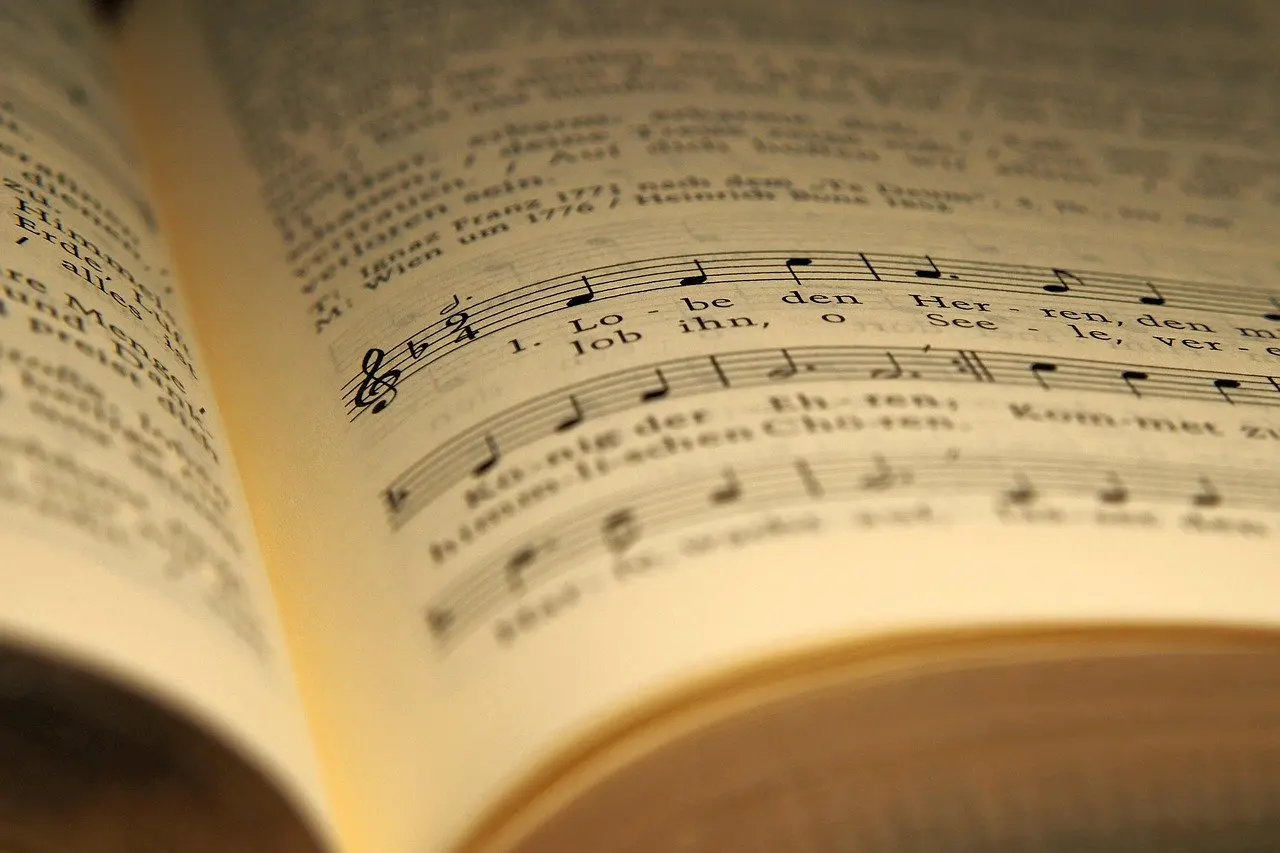
Reading the evening as a whole
The setting shapes the experience as much as the music. Community kirtans are often held in relaxed spaces where people sit on rugs, recite OM, then move into mantras and singing. Because the form is described as shared singing, the best sign of a good evening is how many people in the room are singing by the end, not how polished the leaders sound.
Bhakti yoga, the devotional path that kirtan belongs to, grew out of a wave of devotional fervour that Kirtans.com says swept the Indian subcontinent from roughly the 12th century onward. The same source notes that in 1965 the monk A.C. Bhaktivedanta Swami Prabhupada arrived in New York, a step in how the practice reached Western audiences. If you attend a duo’s session, that history is the background: a long devotional tradition delivered in a form meant to be shared.
Reading other artists alongside this one
Comparing artists shows how much format varies. The shyamdas interview looks at a teacher’s legacy, while the prema hara interview offers another approach to leading a room. Reading them next to this page helps you decide whether you prefer a duo’s layered sound or a single leader’s pacing.
Frequently asked questions
Where did kirtan originate?
Kirtan originated in India. Kirtans.com places its roots in the Vedic and Puranic traditions, reaching back thousands of years.
Who popularised the Hare Krishna maha-mantra?
Chaitanya Mahaprabhu, working in 16th-century Bengal, is credited with popularising the Hare Krishna maha-mantra and the sankirtana at the heart of kirtan today.
Are kirtan chants all directed to the same deity?
Not necessarily. One community host’s chants and mantras are largely directed toward Hindu gods and goddesses, and her sessions also include some songs about world peace.
Do I need to know Sanskrit to join?
No. Because the form is call-and-response and its refrains repeat, a beginner can learn each phrase by listening to the leaders and answering along with the room.